Showing posts with label travel. Show all posts

16 April 2010

Trip to Charlton

Charlton is a small country town in northeast Victoria. Perhaps halfway between Melbourne and Mildura. It was so small that the Shire of Charlton was abolished and merged into the Shire of Buloke.

What makes Charlton famous is its the Charlton Feedlot, a huge feedlot with some 23,000 cattles which is the largest one in Victoria. It is the reason I came to Charlton: we have a research project in Melbourne University ragarding the greenhouse gases emission from feedlot.

Campared to its size, Charlton has a few motels. One of which even was fully booked that we had to change to another one. It was a motel at the fringe of the town, making it the first stop from the farm. The backyard of the motel connected to a big farm and the paddocks runnning all the way up to the horizon.

I generally don't enjoy work. But working on field is so much pleasure, except for the flies and exposure to the sun. I feel so close to the sky which is right there around me, reaching to the very verge of the land. Clouds stretch out in the sky from all directions effortlessly. Birds glide over the water surface, which reflects rays of sunlight into goldness.

The night is a magic gift. Especially at twilight, the last drop of sun lingers at the far reach of the horizon, colouring the strips of clouds into sunset glows, purple, blue, orange. Looking above, it's alright dark, sapphire sky embedded with stars. When sunlight becomes invisible, the Milky Way reveals with all the constellations. The land, the houses and ourselves are enfolded into the sphere of twinkling eternities, and dreams, embrace us.

(Image from http://charlton.vic.au/)

9 April 2010

Malaysia Journal 4 - Chinese off the Southern Seas

Southern Seas, or Nan Yang (南洋), is a Chinese term for South-East Asian countries. One or two hundred years ago when wars and difficult times were occuring in China, migrates from this country, especially from her coastal provinces, began to embark on journeys across the South China Sea to seek opportunities in the under-populated lands.

After WWII, the immigration flow stopped due to the independence of these countries and the rise of nationalism. However, the Chinese culture has still been retained and Chinese people can easily be identified. In Malaysia, Chinese account for some 23% of the total population, though it has been decreasing since the emigration of Chinese to North America and Australia, and the lower birth rates of Chinese compared to Malay and Indians.

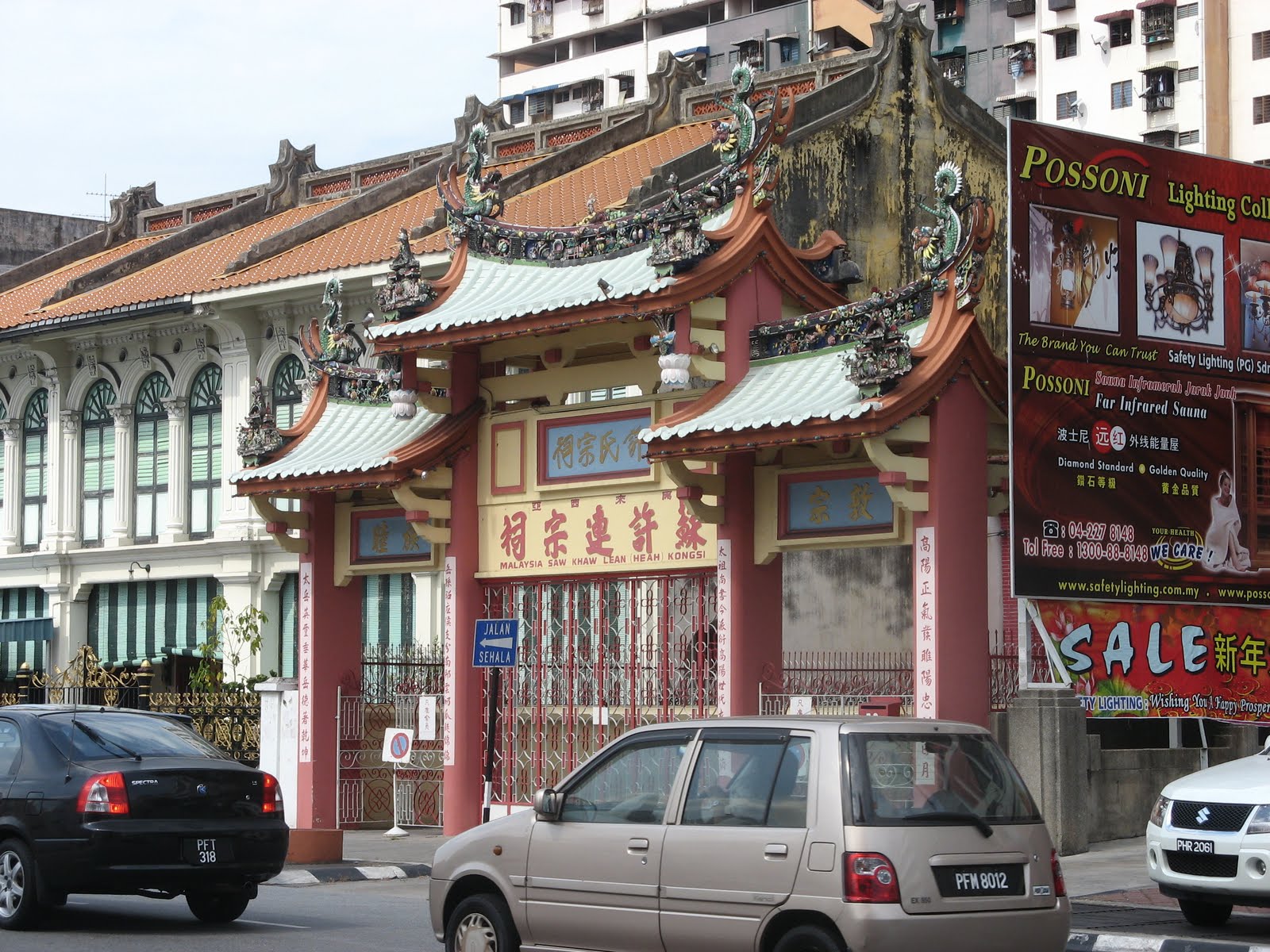
Though having heard of the size of Chinese population in Malaysia before the trip, I was still amazed at the popularity of Mandarin and other Chinese dialects I had overheard on streets in Malaysia. There are Chinese signs everywhere. Menus are written in Chinese sometimes even in an Indian restaurant. Chinese newspapers can be found at major newsagents. People talk to you in Chinese if you look Chinese enough. To be honest I was quite annoyed when asked about where I came from in China because I KNEW they had never heard of my city, not even my province. Why bother asking? Anyway I had to explain to them where exactly my province is.

-Is it near Shanghai or Beijing? 
-Beijing. 
-So is it north or south? 
-It's in Northern China but south of Beijing. About three hours drive. 
-Oh yes I went to China in 2005 and I've been to.. blah blah blah


Well I don't mind sharing my hometown with fellow Chinese people. But it's just TIRING!

So anyway, I think most of the Malaysian Chinese were originated southern coastal Chinese provinces such as Guangdong, Fujian, Hainan, etc. Their mother tongues were Cantonese, Hokkien, Teochew, Hakka and other non-Mandarin Chinese dialects. Thanks to the wisdom of local Chinese community leaders, they began to adopt Mandarin as a lingua franca among local Chinese communities. They have been teaching Mandarin and simplified Chinese characters in school for a while, maybe since 1990s. The uniformity of Chinese dialects in Malaysia is perhaps less than in Singapore, where any Chinese dialects other than Mandarin are prohibited in public broadcasting, but of course better than in Indonesia. In Suharto-era Indonesia, under the 'New Order' scheme, no Chinese was allowed to be taught at school. Even Chinese books were not allowed. This strict policy made most Indonesian Chinese unable to speak Mandarin nor write Chinese. I recently interviewed a local Indonesian Chinese student about how she learnt Mandarin. She said her family hired a tutor to teach her, while the lingua franca of local Chinese community is Hokkien.

Malaysian Chinese cuisine is as wonderful as it is famous for. Hainan Chicken Rice is probably one of the best-known dish from strait-settled Chinese. It was brought by immigrants from Hainan Island. (It is a remote island of China. Think about Tasmania to Australia.) The story was when Hainan people arrived in Malaysia and Singapore they found the jobs were taken by pioneers from Guangdong and Fujian. So they had nothing to do except be a cook. The dish is a combination of tender chicken and oily flavourful rice.

Malaysian Chinese contribute a lot to the formation of Chinese communities in Australian and other Western countries . Especially Australia which is a geographical neighbour of Malaysia. During my visit, a lot of people I talked with had some connection with Australia. They have either friends or family members living in Australia.


30 March 2010

Cheap Airlines: Bargain with Hassle

Melbourne Grand Prix finished last Sunday. The team of Virgin Company, being the parent company of Virgin Blue, however, couldn't even make to the end. It was said because the fuel tank of the car was designed too small as the engineers miscalculated the fuel needed.

Apart from the misfortune case in Grand Prix, Virgin Blue has been awarded as best low-cost airlines by a number of different organisations. It is Australia's second largest airline. Unlike most low-cost airlines, Virgin Blue has an award-winning frequent flyer program, Velocity Rewards. It was the first in Australia providing 'any seat, any time' reward redemption. Its International subsidiary, V Australia, has been successfully operated since 2009 when the first flight between Sydney and LA took off.

Jetstar, Tiger airways are the other two domestic/international low-cost airlines in Australia. They have reduced the domestic air fares dramatically and stimulated domestic travel. They reasonably punctual and reliable.

However, not all cow-lost are that easy to be trusted. One of the biggest low-lost airlines in the world, Air Asia, announced the suspension of flight between Kuala Lumper and Tianjin last year. The route has been suspended for about three months due to 'weather conditions'. Customers who had booked tickets were given fully refund however no further subsidies were placed. As the decision was announced only a month before the suspension date, it was more costly to re-book another ticket from other airlines. Customers were complaining this decision on its official website as well as other forums. Similarly, some flights between Chengdu and KL were cancelled, with a full refund into passengers' accounts.

Sometimes, things can even go worse. At least passengers can get a full refund from AirAsia and they were given advanced notification. Viva Macau Airline, which is an ambious new-born Macau-based internation low-cost airlines which offers cheap route from Macau to Melbourne, Tokyo, Jakarta, Hanoi and several other cities, got its business license of air carrier revoked by Macau authority. The airline was not able to pay its fuel bills, which lead to hundreds of passengers stranded at the airport. There were total 33 flights been cancelled before its license been revoked. Refund plans are announced and some 1,300 cases were received.

Oasis Airlines, an ex-Hong Kong based low-cost airline, ceased its operation in 2008 after it went to bankrupt. Several other cases can be found in China, where civil aviation is highly regulated and competition is heated.

Despite all these risks, cheap airlines are surely providing more opportunities for passengers having lower budget to travel. What we need is a better regulated market which can prevent this hassle from happening.

18 March 2010

Lonely Planet Has Come to Town


A whole new series of Lonely Planet, who keeps on ripping off its fellow Australians to feed people in UK and US, has arrived in town. They are now on sale in Augus & Robertson Bookstore, with an amazing price of $51.99, which is such a discouraging behaviour that made me more determined not to buy ANY books in Australia. I do care about the carbon offset of long distance international postage, but I also care about my bank account which is on the verge of deficit on the arrival of the bill of university tuition fee.

(US version of Discover. Pic from Lonely Planet Official Website)
However such behaviour does not stop me from entering the bookshop and have a little look of the book. Obviously lonely planet has launched their new campaign by inserting a little cute bookmark introducing their different series of travel guides. And the new one, Discover, has been defined as the book suitable for people who "focus time and planning on those can’t-miss experiences". For me, it looks like a country version of Encounter guides, which were in full colour and such such.

I assume that as the emerging of more and more full colour travel guide books, lonely planet is seeking a way to survive. Country guides are probably for those who will stay in a country for a long time and set their steps on every small town with less than 2,000 people and enjoy every restaurant and hostels around the country, while Discover guides are for fast-pace travellers, who would rather plan their itinerary ahead based on the photos and descriptions of the travel guide.

I happened to have bought a Country guide of Japan from Amazon UK at £8.99 the day before yesterday, after a desperate hunting of suitable travel guide of this country. I would certainly have bought a discover guide instead if I knew, for I will only be in Japan for two weeks and I need a simulation of photos and full colours. Unfortunaly, this is life.


One more thing, the guides have been pubulished as two versions, AU and UK version (red cover) and US version (green cover). I wonder why. Spelling?


AU and UK version of Discover. from Lonely planet official website.


9 March 2010

Great Ocean Road

After being in Melbourne for almost 2 years, today I finally grasp a chance to visit the Great Ocean Rd.

The road was being constructed since 1918, after World War I. 3000 soldiers were back from Europe and apparently had nothing to do in that period of time. Therefore they were assigned to build such a road in a manner to memorize the soldiers who died in the war.

It took about 12 years for the road to be completed, then it became a tourism hotspot of Victoria. Hundreds of thousands of tourists came to boost the local economy every year. Honestly I was very impressed by Australian involvement in WWI, whose continent the fire of war didn’t reach at all. Everything they did in the war was for England - their motherland.

Then I heard a terrifying story about how a ship from England crashed to the cliff a hundred years ago. Only two survived. They now develop this area as a tourist attraction which I do not appreciate at all. I have to admit I am a little suspicions and concerned about the welfare of the passed-away.

The scenery, I’d say, is fascinating. However I am not sure if it is fascinating enough for one to sleep in a van for 7 hours ups-and-down on the rugged road to just have a look of the stuff which they could find on every website.

-----------------------------------------------------------


21 February 2010

Malaysia Journal 1 – The Indians

It has been days I went to Malaysia. Sadly I didn’t post anything much onto my blog about the trip. There are so much to say but so little time. I’ll start with Malaysian Indians, an area I least familiar with.
-------------------------------------------------------------------------------------------
It is well known that the Malaysia population consists of three ethnic groups, Chinese, Malay, and Indian.
Before my trip, I somehow have understood the existence of the former two, the third one, however, was beyond my awareness.
Geographically, Malaysia is a neighbour of India. There is only Bay of Bengal (the bay north of Indian Ocean) between them. That explains the huge number of Indian dwellers in this country.
The first breakfast I had in Malaysia was at a small Indian restaurant near my hostel. I tasted roti and, OMG, it was so cheap! A roti with egg was only about RM2 (A$0.67, CNY4). Watching the guy making roti was a lot of fun, reminding me a classic Chinese joke about how bad for an Indian chef to make roti with both of their hands, coz they use their left hand for some other purpose. Anyway, I was thinking about the joke while having the roti, it was a sin.
Then in Penang we went to a district marked as ‘little India’. It was full of Indian boutiques, DVD/CD stores and food stalls. I was attracted by a huge gorgeous picture of Brahma. (I didn’t figure out it was Brahma until I realized he had four heads.)

Opposite to this poster was a DVD/CD store. The young Indian shop assistant was very warm and beautiful that we had three pictures with her. (they are unfortunately in my cousin’s camera) I bought my housemate a CD of religions Indian music, which later on turned out to be he didn’t like. And I bought an anima DVD about the story of Ganesha (the Indian god with an elephant head).

The Indian people we met in Malaysia were really nice and friendly. Here are the photo we took in an Indian restaurant.


In Penang we went to an Hindu temple. I had heard this religion encourages its followers to worship multiple gods. But I was still amazed that the number of statues in that small temple.


The gate tower (Gopuram) was medium-sized.

In Kuala Lumpur I went to a Gurdwara (Sikh temple). Lonely Planet claimed it as the biggest temple in SE Asia. Upon entrance, every visitor is required to cover their head up. (I should have taken a picture but it seemed inappropriate) Then I came through the dining hall. The guys sitting there kindly offered me food and drink (they were free) but I just had lunch. Then a guy took me up to the Darbar Sahib (main hall) upstairs. I had to wash my feet before entering. It was a big empty hall and I walked extremely cautiously. At the end of the hall, under the statue of their god, lying a bowl of Karah Parshad, which is a sweet food made by semolina, butter, and sugar. I was offered one spoonful and I thought it was rude to refuse so I tasted it. Sweet it was. And oily as well. I asked my guide what it meant to be but he just smiled and refused to explain.


In Kuala Lumpur, I talked to an Indian young man who can speak fluent native Mandarin. He said he went to a Chinese school in Malaysia. He was the only one in his family who attended a Chinese school, under the will of his grandfather. I thought it must have been difficult for him to start learning and starting making friends with Chinese people.
Posted by Picasa

21 January 2010

Malaysia Now

Here I am in Chinatown of Penang, Malaysia. The weather is hot and humid.Even though the fans are swirling at their top rates, the room is still full of sweaty people sitting uneasily in front of computers getting here and away.

It is such a lovely trip that I found most of the food on street are affordable compared to their counterparts in Melbourne. Today seems to be an Indian food day for us.

Now we realized how common Chinese is used in Malaysia. As the approaching of Chinese new year, Penang is full of sales and new year musics which made me reluctant to realize that I have to go back to Melbourne for Chinese new year. Anyway this would be my first time of having new year without family so could be novel or painful.

Tomorrow a friend will accompany us to the sites around Penang. I will take a lot of photes of course and upload them to facebook or/and flickr.

LinkWithin

Related Posts with Thumbnails