Showing posts with label Malaysia. Show all posts

9 April 2010

Malaysia Journal 4 - Chinese off the Southern Seas

Southern Seas, or Nan Yang (南洋), is a Chinese term for South-East Asian countries. One or two hundred years ago when wars and difficult times were occuring in China, migrates from this country, especially from her coastal provinces, began to embark on journeys across the South China Sea to seek opportunities in the under-populated lands.

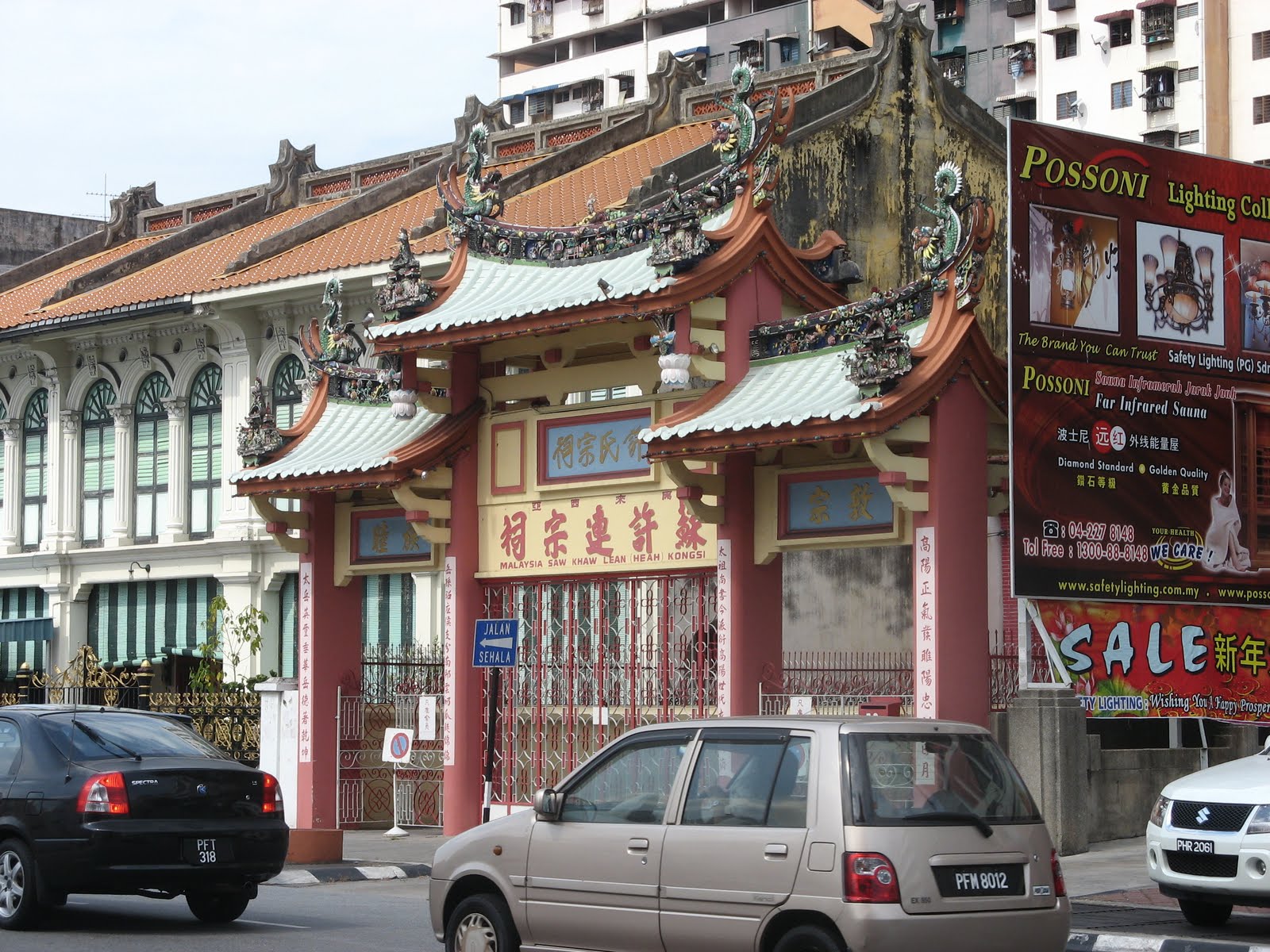
After WWII, the immigration flow stopped due to the independence of these countries and the rise of nationalism. However, the Chinese culture has still been retained and Chinese people can easily be identified. In Malaysia, Chinese account for some 23% of the total population, though it has been decreasing since the emigration of Chinese to North America and Australia, and the lower birth rates of Chinese compared to Malay and Indians.

Though having heard of the size of Chinese population in Malaysia before the trip, I was still amazed at the popularity of Mandarin and other Chinese dialects I had overheard on streets in Malaysia. There are Chinese signs everywhere. Menus are written in Chinese sometimes even in an Indian restaurant. Chinese newspapers can be found at major newsagents. People talk to you in Chinese if you look Chinese enough. To be honest I was quite annoyed when asked about where I came from in China because I KNEW they had never heard of my city, not even my province. Why bother asking? Anyway I had to explain to them where exactly my province is.

-Is it near Shanghai or Beijing? 
-Beijing. 
-So is it north or south? 
-It's in Northern China but south of Beijing. About three hours drive. 
-Oh yes I went to China in 2005 and I've been to.. blah blah blah


Well I don't mind sharing my hometown with fellow Chinese people. But it's just TIRING!

So anyway, I think most of the Malaysian Chinese were originated southern coastal Chinese provinces such as Guangdong, Fujian, Hainan, etc. Their mother tongues were Cantonese, Hokkien, Teochew, Hakka and other non-Mandarin Chinese dialects. Thanks to the wisdom of local Chinese community leaders, they began to adopt Mandarin as a lingua franca among local Chinese communities. They have been teaching Mandarin and simplified Chinese characters in school for a while, maybe since 1990s. The uniformity of Chinese dialects in Malaysia is perhaps less than in Singapore, where any Chinese dialects other than Mandarin are prohibited in public broadcasting, but of course better than in Indonesia. In Suharto-era Indonesia, under the 'New Order' scheme, no Chinese was allowed to be taught at school. Even Chinese books were not allowed. This strict policy made most Indonesian Chinese unable to speak Mandarin nor write Chinese. I recently interviewed a local Indonesian Chinese student about how she learnt Mandarin. She said her family hired a tutor to teach her, while the lingua franca of local Chinese community is Hokkien.

Malaysian Chinese cuisine is as wonderful as it is famous for. Hainan Chicken Rice is probably one of the best-known dish from strait-settled Chinese. It was brought by immigrants from Hainan Island. (It is a remote island of China. Think about Tasmania to Australia.) The story was when Hainan people arrived in Malaysia and Singapore they found the jobs were taken by pioneers from Guangdong and Fujian. So they had nothing to do except be a cook. The dish is a combination of tender chicken and oily flavourful rice.

Malaysian Chinese contribute a lot to the formation of Chinese communities in Australian and other Western countries . Especially Australia which is a geographical neighbour of Malaysia. During my visit, a lot of people I talked with had some connection with Australia. They have either friends or family members living in Australia.




4 March 2010

Malaysia Journal 2 - Baba Nyonya

How lazy I was to hold this topic until a month after my visit to Malaysia! Writing journal is never a easy job, especially when writing about something you don't really know about and in your second language.

Baba Nyonya (峇峇娘惹 in Chinese) refers to the descendants of the Chinese who immigrated to Malaysia during 15th and 16th. It was used as a term to separate the Chinese arrived in Malaysia after that time. Before 1960s, Baba Nyonya were considered as Bumiputra (literally means 'sons of earth', referring to native Malaysian people, predominately Malay ethnic), and enjoyed all the privileges as in the law. However the violence between Chinese and Malay in May 13 Incident (1969) and promoted the implementation of a group of policies in favour to created more opportunities of Bumiputera, and therefore reduce the economical power of Chinese Malaysians. The definition of Bumiputera then narrowed to Malay people and several other indigenous Malaysian ethnic groups.

The term of Baba-Nyonya originally means Grandpa and Grandma, while Baba refers to the male and Nyonya female. This race is considered as upper class in Malaysian society. They could speak English, Malay and Chinese so that they could establish business relations with each of the groups. Their loyalty to British Crown during colonial time and their social connections accumulated a huge amount of fortune for them.

Baba-Nyonya was famous for their astonishing architecture, costumes and customs. Their lifestyle was influenced by both Chinese and Malaysian cultures, and, on degree, Western cultures. They lives were extravagant in whichever way. It is said that they must have 12 dishes in every dinner. Considering their sizes of family, I am little convinced. The traditional clothing for Nyonya is Kebaya, a traditional Indonesian clothing. It now can be found on the Air Attendants from Singapore Airline.

Now Baba Nyonya has lost its status as the policy is no longer in favour for them. Many of them has immigrated to Singapore, North American, Australia and New Zealand. Some of their mansions are kept well as a place for ancestor memorial or a meseum. They are a nice place to visit and to take photographs. Especially wedding photographs.


Kitten of Nyonya.


A Combination of different cultures


Ancestral Hall

21 February 2010

Malaysia Journal 1 – The Indians

It has been days I went to Malaysia. Sadly I didn’t post anything much onto my blog about the trip. There are so much to say but so little time. I’ll start with Malaysian Indians, an area I least familiar with.
-------------------------------------------------------------------------------------------
It is well known that the Malaysia population consists of three ethnic groups, Chinese, Malay, and Indian.
Before my trip, I somehow have understood the existence of the former two, the third one, however, was beyond my awareness.
Geographically, Malaysia is a neighbour of India. There is only Bay of Bengal (the bay north of Indian Ocean) between them. That explains the huge number of Indian dwellers in this country.
The first breakfast I had in Malaysia was at a small Indian restaurant near my hostel. I tasted roti and, OMG, it was so cheap! A roti with egg was only about RM2 (A$0.67, CNY4). Watching the guy making roti was a lot of fun, reminding me a classic Chinese joke about how bad for an Indian chef to make roti with both of their hands, coz they use their left hand for some other purpose. Anyway, I was thinking about the joke while having the roti, it was a sin.
Then in Penang we went to a district marked as ‘little India’. It was full of Indian boutiques, DVD/CD stores and food stalls. I was attracted by a huge gorgeous picture of Brahma. (I didn’t figure out it was Brahma until I realized he had four heads.)

Opposite to this poster was a DVD/CD store. The young Indian shop assistant was very warm and beautiful that we had three pictures with her. (they are unfortunately in my cousin’s camera) I bought my housemate a CD of religions Indian music, which later on turned out to be he didn’t like. And I bought an anima DVD about the story of Ganesha (the Indian god with an elephant head).

The Indian people we met in Malaysia were really nice and friendly. Here are the photo we took in an Indian restaurant.


In Penang we went to an Hindu temple. I had heard this religion encourages its followers to worship multiple gods. But I was still amazed that the number of statues in that small temple.


The gate tower (Gopuram) was medium-sized.

In Kuala Lumpur I went to a Gurdwara (Sikh temple). Lonely Planet claimed it as the biggest temple in SE Asia. Upon entrance, every visitor is required to cover their head up. (I should have taken a picture but it seemed inappropriate) Then I came through the dining hall. The guys sitting there kindly offered me food and drink (they were free) but I just had lunch. Then a guy took me up to the Darbar Sahib (main hall) upstairs. I had to wash my feet before entering. It was a big empty hall and I walked extremely cautiously. At the end of the hall, under the statue of their god, lying a bowl of Karah Parshad, which is a sweet food made by semolina, butter, and sugar. I was offered one spoonful and I thought it was rude to refuse so I tasted it. Sweet it was. And oily as well. I asked my guide what it meant to be but he just smiled and refused to explain.


In Kuala Lumpur, I talked to an Indian young man who can speak fluent native Mandarin. He said he went to a Chinese school in Malaysia. He was the only one in his family who attended a Chinese school, under the will of his grandfather. I thought it must have been difficult for him to start learning and starting making friends with Chinese people.
Posted by Picasa

LinkWithin

Related Posts with Thumbnails